engineer drawings for 3d printers
What's the deviation between two-dimensional (2d) and three-dimensional (3D) art? In general, 3D art incorporates height, width, and depth, whereas 2nd art tends to be express to a flat surface. Pottery and sculptures are good examples of 3D art, while paintings, drawings, and photographs are technically all bars to 2 dimensions. However, folks who piece of work on newspaper or canvas often create the illusion of the 3rd dimension in their work. So, how do they render such lifelike fine art? To find out more, we're delving into the history of 3D art and the theories behind information technology.
Aspects of 3D Art
As Artdex puts information technology, "Three-dimensional art pieces, presented in the dimensions of height, width, and depth, occupy physical space and can be perceived from all sides and angles." Some types of 3D art, such equally sculpture, pottery, and jewelry, have been around since the beginning of fourth dimension, while other iterations are relatively new.
When information technology comes to iii-dimensional works, there's a lot of terminology to pin down. For example, all truly 3-dimensional works have book — or the "quantity of three-dimensional space enclosed by a airtight surface." Additionally, 3D art has mass — this kind of intrinsic, tangible weight. Of grade, there are variations in only how 3D a work is — and a variety of terms describes these degrees of dimensionality.
Depression Relief: Low-relief sculptures are carved onto a 2D object with just enough depth to permit for the formation of shadows. Lorenzo Ghiberti's Gates of Paradise is a adept instance of a low-relief sculpture.
Loftier Relief: Loftier-relief sculptures too beetle outward from a apartment surface, only to a much greater degree than depression-relief works. To exist considered high relief, at to the lowest degree half of the sculpture must protrude outward from the surface.
Frontal Sculpture: While frontal sculptures are technically 3D, they're simply designed to be viewed from ane angle. Think metal sculptures intended to exist used as wall art.
Full Circular: Full round sculptures, such as Michelangelo'due south David, are and then 3D that they can be viewed from any side.
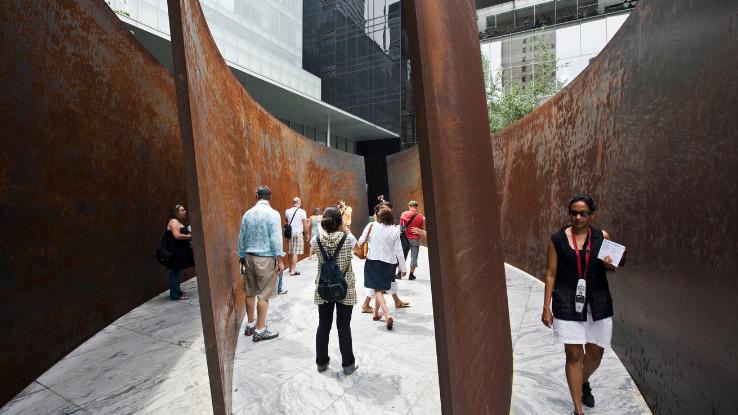
Walk Through: Walk-through fine art takes things to the next level by requiring the viewer to actually walk through the piece in society to truly experience information technology.
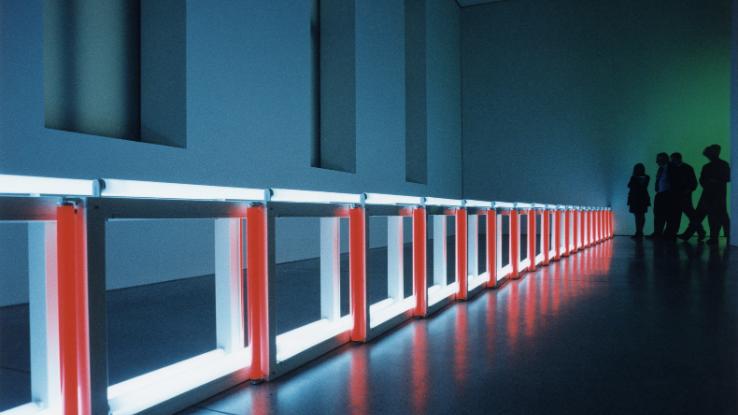
Installation Art: Installation art is like walk-through art, merely on a much grander scale. Artists often apply an entire room (or edifice) to create their ain atmosphere or environment.
Landscape Fine art: Mural art is an art that utilizes — yous guessed it — landscaping and other natural or outdoor elements.
Drawings, paintings, and other artworks that are produced on paper or canvas are technically 2D. But during the 1400s, artists began to realize that by incorporating the same principles found in 3D works they could create the illusion of the tertiary dimension. They, quite literally, gained some perspective.
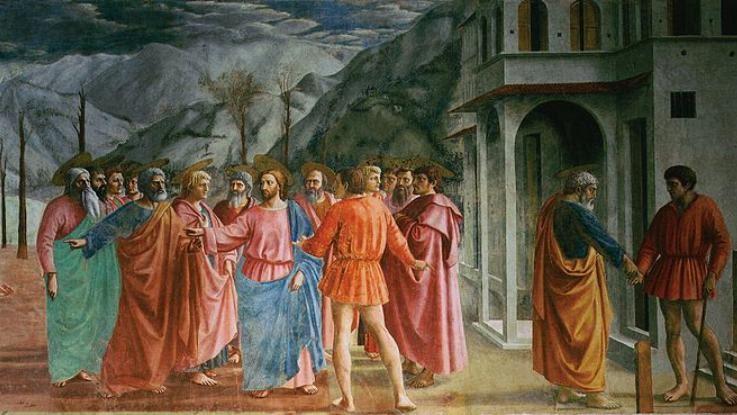
The advent of perspective in drawing and painting is largely credited to an Italian architect and creative person named Filippo Brunelleschi and his use of the vanishing bespeak. This new technique caught on quickly, and, soon plenty, the Italian artist Masaccio became the kickoff-known painter to truly master the technique. To this solar day, he's still considered the commencement great painter of the Quattrocento period of the Italian Renaissance.
For centuries, artists have also relied on shading to give their drawings and paintings the illusion of mass. The use of shadows and overlapping objects — likewise every bit a focus on size in relation to the vanishing signal — can all help achieve that 3D consequence in an otherwise flat medium. Undoubtedly, the implementation of perspective vastly changed the landscape of art, so much so that it's one of the get-go principles fledgling artists study to this day.
Modern 3D Art
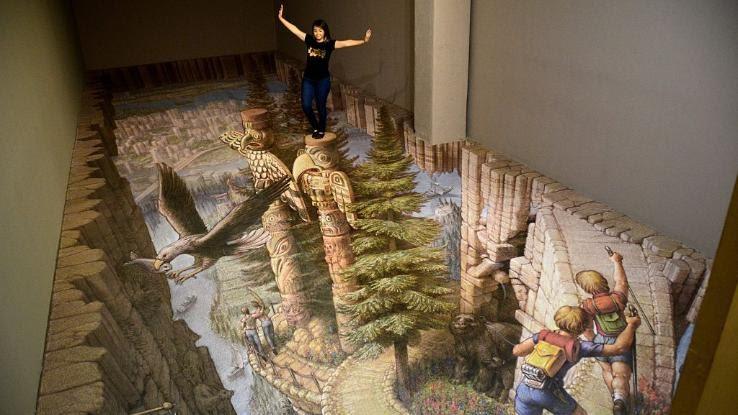
Some modern artists, such as Kurt Wenner, have taken the thought of using 3D concepts in 2D fine art to a whole other level entirely. In the 1980s, Wenner began creating incredibly lifelike 3D-style street fine art on sidewalks and streets with chalk. By combining his skills as an creative person with intricate geometrical designs, Wenner launched a pavement art movement that's still agile today thank you to hundreds of festivals, such as the Pasadena Chalk Festival.
Of course, sculpture remains a popular course of 3D art. French sculptor Auguste Rodin, the creator of iconic pieces like The Buss (1884) and The Thinker (1880), reshaped the art form by rejecting the idea that sculpture had to revolve around classical themes. Instead, Rodin focused on appealing to the viewer'due south emotions and imagination. By promoting the idea that there was no right or wrong estimation of his work, Rodin laid the foundation for many modernistic sculptors today.
In the 20th century, 3D art expanded to a broad variety of different mediums. Glass sculpture began to see a significant rise in popularity, paving the way for artists like Dale Chihuly. Additionally, installation and functioning fine art saw like surges in popularity every bit artists moved beyond the canvas, beyond the white walls of the gallery. Using everything from lights to natural, found objects, sculptors express themselves with all of the malleability 3D fine art has to offering. Even filmmakers have found means to create a supposedly more immersive experience, all thanks to special 3D glasses.
If y'all'd like to learn more about how to add together 3D perspective to your ain drawings or paintings, there are a number of great tutorials that will take you through the basics of perspective, shading, and more.
Source: https://www.reference.com/world-view/three-dimensional-art-daa1f7e9deea87a3?utm_content=params%3Ao%3D740005%26ad%3DdirN%26qo%3DserpIndex
0 Response to "engineer drawings for 3d printers"
Post a Comment